
Another world game
Little is known of the “solar system” and astronomy of the world Westeros is set in, though in general, it appears to be roughly identical to real-life Earth. Astronomy is rarely mentioned and not very important to the narrative, but there has never been any indication that it is particularly different from real-life. https://virtual-centre.net/ The world in the fictional narrative has one sun. One moon orbits the world, going through lunar phases that make up a “month” (known as a “moon-turn”), equal to a real-world month.
The maesters also understand that theoretically, a ship should be able to circumnavigate the globe, by continuing to sail west from Westeros until they come around to Yi Ti on the other side, then continue going west until they return to Westeros. They also understand that a ship could sail north over the pole and reach Yi Ti on the other side—provided that there is no landmass or arctic ice in the way. However, as of yet no ship has ever successfully circumnavigated the globe. Ships that have sailed west of Westeros and returned report finding only a vast ocean, and other ships simply never returned. Even the far south of Sothoryos and eastern end of Essos are unknown to men in Westeros. There have been some attempts to navigate north over the pole, but all have ended in failure due to dangerous ice and other unknown dangers.
By accepting all cookies, you agree to our use of cookies to deliver and maintain our services and site, improve the quality of Reddit, personalize Reddit content and advertising, and measure the effectiveness of advertising.
The unpredictable and years-long seasons of the world Westeros is in are in some ways more akin to mini-Ice Ages and warming periods, such as happened in the real-life Earth, though never to this degree. The “Medieval Warm Period” was a period of rising average temperatures across the northern hemisphere from the years 950 to 1250, which was followed by the “Little Ice Age”, an equally long period of falling average temperatures. The major difference is that these “mini-Ice Ages” occurred gradually over a period of two or three centuries on real-life Earth: Westeros, in contrast, can shift within a matter of years or months into a bitterly cold “winter” lasting a decade. There is still some variation in temperature across a normal “calendar year” in Westeros, so that what should be winter months in a normal 12 month year do tend to be slightly colder than the rest. Because the North is located at a higher latitude it experiences such variation to a greater degree, and is known to experience “summer snows” during years-long summer seasons (i.e. during what should be winter months in a normal 12 month seasonal cycle). Such “summer snows” in the North are mentioned by Pycelle in Season 1’s “Cripples, Bastards, and Broken Things”.
A major feature of the world the narrative is set in is that it experiences long seasons of varying length, usually lasting at least a couple of years each. Historically, the seasons have been known to last up to a decade in extreme cases, though these only happen once every century or so. The length of the seasons is completely unpredictable and varies randomly. There is some very loose correlation that a long summer is often followed by a long winter, but this is more of a trend than a rule. Conversely, seasons may be unpredictably short: the Year of the False Spring was so-named because an entire spring season occurred during it which lasted only two months. The maesters of the Citadel keep a close eye on the length of the days in order to try to predict how long the current season will last, but this is an inexact science at best. The continent of Westeros extends much farther north than the continents of Essos and Sothoryos, and so is much more adversely affected by long winters. Meanwhile, Essos and Sothoryos are closer to the equatorial regions, which are typically warmer.
World series game 6
Staked to an 8–5 lead, Orosco faced Ed Romero, who took over at shortstop for Owen in the eighth, to start the top of the ninth and retired him on a foul pop. Boggs then grounded out to Backman at second, leaving Barrett as the last hope for the Red Sox. Orosco worked a 2–2 count before getting Barrett to swing and miss, then tossed his glove high into the air and dropped to his knees as the Mets all converged on the mound to celebrate their world championship victory.
Schiraldi got two quick strikes on the Mets’ third baseman, who had already driven in one run so far. However, with his team within one strike of that elusive championship, he could not finish the job as Knight singled to left-center. Carter scored from second standing up and the speedy Mitchell advanced to third. Finally, McNamara decided his closer had seen enough and called for the veteran Stanley to try to close out the game. Some later speculated as to why Stanley, who had been warmed up by the time the tenth inning began, had not been called upon earlier instead of McNamara asking for a third inning out of Schiraldi, who had already blown the save in the eighth.
Emily Dozier is a live events and lifestyle writer at The Sporting News, covering everything from sporting events and music festivals to broadway shows and stand-up comedy. Based out of New York, she graduated from the University of Georgia with a bachelor’s degree in journalism. When not covering the SN tickets beat, Emily enjoys playing volleyball and cooking. Prior to joining The Sporting News in 2023, Emily covered the 2023 FIFA Women’s World Cup for the Associated Press.
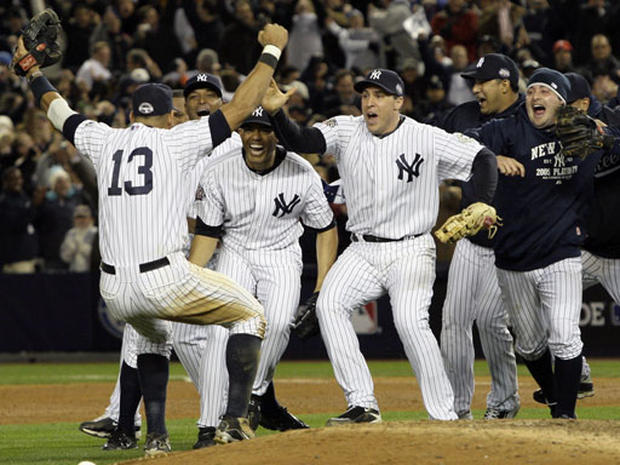
Staked to an 8–5 lead, Orosco faced Ed Romero, who took over at shortstop for Owen in the eighth, to start the top of the ninth and retired him on a foul pop. Boggs then grounded out to Backman at second, leaving Barrett as the last hope for the Red Sox. Orosco worked a 2–2 count before getting Barrett to swing and miss, then tossed his glove high into the air and dropped to his knees as the Mets all converged on the mound to celebrate their world championship victory.
Schiraldi got two quick strikes on the Mets’ third baseman, who had already driven in one run so far. However, with his team within one strike of that elusive championship, he could not finish the job as Knight singled to left-center. Carter scored from second standing up and the speedy Mitchell advanced to third. Finally, McNamara decided his closer had seen enough and called for the veteran Stanley to try to close out the game. Some later speculated as to why Stanley, who had been warmed up by the time the tenth inning began, had not been called upon earlier instead of McNamara asking for a third inning out of Schiraldi, who had already blown the save in the eighth.
College world series game 3
Texas A&M’s Chris Cortez took over in the second inning after opener Zane Badmaev. Despite five walks, the junior right-hander allowed no runs and two hits while striking out seven against the best offense in Division I college baseball.
2. At 9:00 a.m. Stadium staff will start the lottery process. Each person in line (over age of 16 and with a matching photo ID to their credit/debit card) will be assigned a number, that number will also be put into a box where it will then be randomly drawn.
With the win, the Vols force a decisive Game 3 at Omaha’s Charles Schwab Field on Monday night at 7 p.m. ET. Tennessee will attempt to become the first No. 1 national seed since Miami in 1999 (when the NCAA baseball tournament’s current format was first introduced) to win the College World Series.
/cloudfront-us-east-1.images.arcpublishing.com/gray/J6ZCZNM3AJGDTOBT5APKSYMLKI.jpg)
Texas A&M’s Chris Cortez took over in the second inning after opener Zane Badmaev. Despite five walks, the junior right-hander allowed no runs and two hits while striking out seven against the best offense in Division I college baseball.
2. At 9:00 a.m. Stadium staff will start the lottery process. Each person in line (over age of 16 and with a matching photo ID to their credit/debit card) will be assigned a number, that number will also be put into a box where it will then be randomly drawn.
With the win, the Vols force a decisive Game 3 at Omaha’s Charles Schwab Field on Monday night at 7 p.m. ET. Tennessee will attempt to become the first No. 1 national seed since Miami in 1999 (when the NCAA baseball tournament’s current format was first introduced) to win the College World Series.